

Listeners:
Top listeners:
00:00
00:00
volume_up
chevron_left
-
 play_arrow
Strath Hits Radio
-
 play_arrow
From Europe to Africa: Strathmore Students Return with a Renewed Global Vision Paul Musingi
Crossing the Road: We Know Better, We Just Don’t Care Enough

Every morning, I cross Lang’ata Road where I am not supposed to. Not at the zebra crossing near T-Mall.
Not at the Madaraka footbridge. I cross right in the middle of a busy highway, under a flyover, where cars are accelerating and drivers are already frustrated.
I am not proud of it. But I do it and so do many of us.
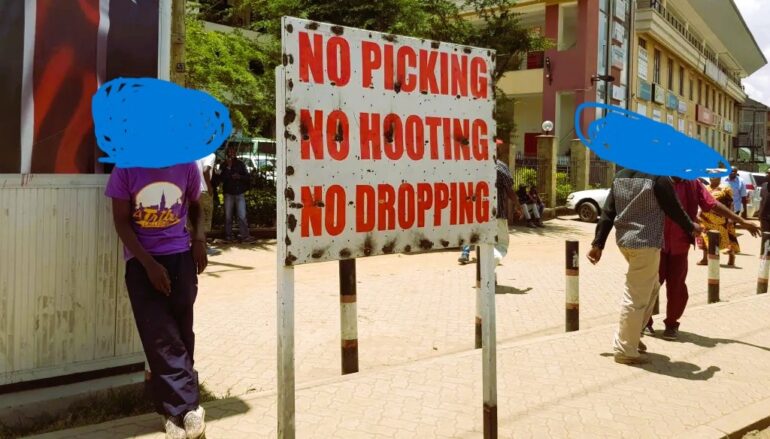
This is not an article about bad drivers or bad government. It is about me — a Strathmore student.
A normal Kenyan, educated, well informed, busy, in a hurry and complicit.
Right is boring, wrong feels alive
I come from Embakasi. When I use a matatu, there is only one official place I am supposed to alight near Nyayo: Nyayo Estate, Gate D.
That is the bus stage. Everything else is unofficial.
But often, instead of going all the way to Gate D, I choose to alight at Naivas along Airport North Road.
That place is not a bus stage, everyone knows it. The driver knows it. The tout knows it.
I know it. Yet we still do it. Why? Because it feels faster, it feels convenient and everyone else is doing it.
So the vehicle slows down where it should not. Traffic builds, someone hoots and another driver swerves.
People who boarded properly lose time.
I step out feeling like I have saved a few minutes. But in the real sense i have not saved time, I have shifted the cost to everyone else.

From Small Shortcuts to Systemic Failure
That single decision does not end with me stepping off the matatu. It creates a chain reaction: traffic congestion, fuel wasted,
drivers compensating by speeding later, touts overloading to recover lost time, police negotiating instead of enforcing and risk becoming routine.
By the time I reach Nyayo, the pattern has already been reinforced. Then I board another matatu towards T-Mall.
I swing between overload and waiting.
Either way, the same logic follows me: convenience over order, speed over patience, self over system.

The Final Crossing
When I reach T-Mall, I face another choice. There is a zebra crossing nearby. There is a footbridge at Madaraka that leads safely across Lang’ata Road.
But most days, I choose the third option.
I cross the highway directly, through fast-moving traffic under the flyover. It saves me a few minutes. It risks lives. It disrupts traffic.
It reinforces the very culture we complain about.
“This is Kenyan culture,” we say. But culture is not abstract. Culture is behavior repeated often enough that it feels normal. Oh my creator! I am part of it.

A Necessary Discomfort
Strathmore University is an elite institution. That word makes us uncomfortable, but it is true — not because of arrogance, but because of responsibility.
The institution is not the problem. I am.
When I cross the road illegally, I am not standing for excellence. I am not standing for integrity. I am not standing for leadership but convenience.
And that is how decay works — not through dramatic corruption, but through ordinary compromises made by ordinary people who know better.
What Must Change First
This is not a call for perfection. It is a call for awareness. Alight at Gate D even when it feels far. Use the zebra crossing even when it adds minutes.
Take the footbridge even when it feels inconvenient. Refuse to overload. Choose patience once a day.
If enough individuals do this consistently, systems adjust. Traffic eases. Enforcement becomes possible. Risk reduces.
Change does not begin with policies. It begins with people who stop crossing the road where they are not supposed to, including me.
This is the first in a series — not about blaming the country, but about examining the small, everyday decisions that quietly cost our society billions.
Sometimes, progress begins with something as simple as crossing the road properly.
Article by Mark Denzel
Featured post
Latest posts

From Hope to Impact: Evaluating Social Programs for Evidence-Based Policy in Africa Every policy comes bearing hope
From Europe to Africa: Strathmore Students Return with a Renewed Global Vision

What Are You a Slave To?

From Nairobi to Vienna: A Life-Changing Exchange Experience

How Coca-Cola Is Rewriting Youth Engagement: Inside the “It’s That Fresh” Campaign
Upcoming shows









Post comments (0)