Listeners:
Top listeners:
-
 play_arrow
Strath Hits Radio
-
 play_arrow
From Europe to Africa: Strathmore Students Return with a Renewed Global Vision Paul Musingi

From Europe to Africa: Strathmore Students Return with a Renewed Global Vision
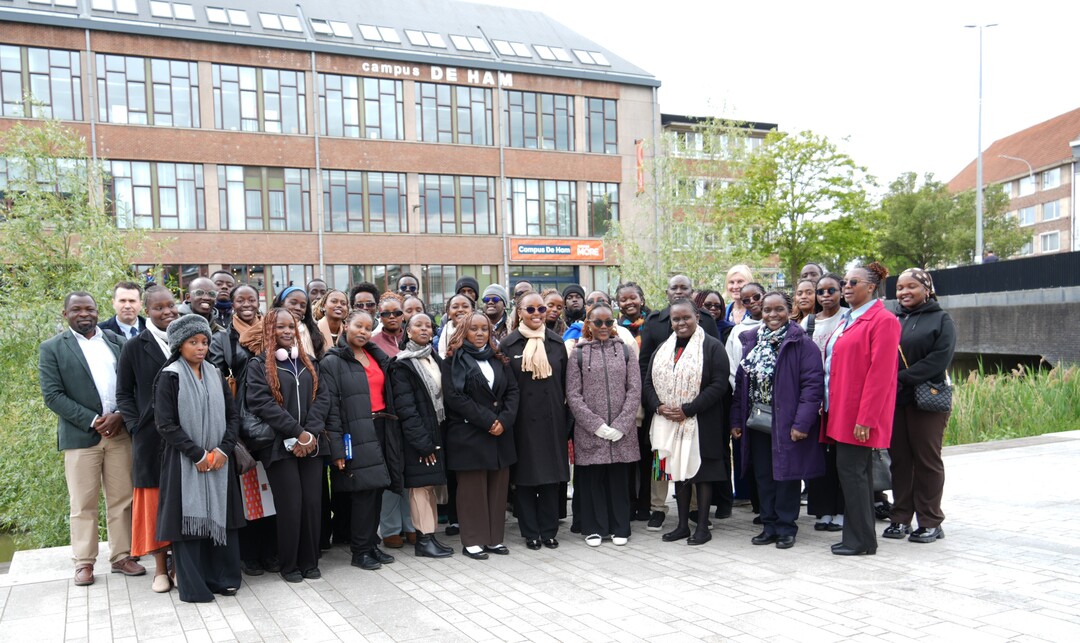
A two-week trip to the Netherlands, Germany and Belgium changed more than just their passports.
Article By Jonathan Icubahiro
NAIROBI — May 26, 2026
When Ian Kamau boarded a flight to Europe this month, he carried with him the mental image of the International Criminal Court that most International Studies students carry — one pieced together from lectures, textbook diagrams and news clips. What he brought back was something different entirely.
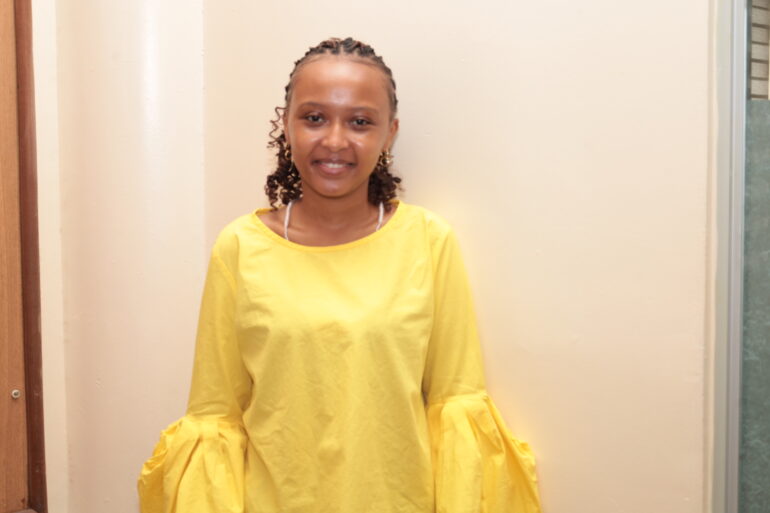
“We keep hearing about these institutions on TV and reading about them in class,” said Kamau, a third-year student at Strathmore University’s School of Humanities and Social Sciences (SHSS).
“But this trip exposed us to the reality of the things we see in books. It was good to experience a place where systems work and where governments and society cooperate for the betterment of the country.”
From May 5 to May 17, 2026, a group of SHSS students and staff undertook an international academic trip across the Netherlands, Belgium and Germany.
Across twelve days, the students engaged with some of Europe’s most influential institutions — from the ICC and Peace Palace in The Hague to the Permanent Court of Arbitration, Erasmus University Rotterdam, Thomas More University in Antwerp and the Council of the European Union in Brussels — an eye-opening journey, with many experiencing life beyond Kenya for the very first time.
Roy Kamanga Kahumbi, another International Studies student who will enter his final year in September, described the Peace Palace as a turning point.
“The world is my oyster.” — Roy Kamanga Kahumbi
At Thomas More University, a lecture on African international business by Professor Paul Ngang Nchu hit a nerve. “We are still being exploited in many ways,” said Kamau.
“The lecture challenged us to think about conducting African business on our own terms.” Fourth-year student Jane Wangare Kingori agreed: “It challenged us to rethink Africa’s position in global business and governance.”Africa in the Global Economy: A Lecture That Hit Home
Jane Wangare Kingori, a fourth-year student for whom this was also a first international trip, echoed that sentiment. Sessions on modern business analysis challenged her to think critically about Africa’s position in westernized global markets.
“It was meaningful because it addressed how modern markets have become heavily westernized,” she said. “The lectures challenged us to rethink Africa’s position in global business and governance.”
Culture Shock, Missed Buses and Hard-Won Lessons
Not all lessons came in lecture halls. Jane was accidentally left behind at a Dutch flower farm when the group’s bus departed without her.
She navigated public transport in an unfamiliar country alone to catch up. “It turned into a surprisingly exciting experience,” she recalled.
Staff member Caleb Kandagor found a different kind of jolt at the African Museum in Brussels, where a Swahili phrase —
Yote yatapita isipokuwa yaliyopita (All things shall pass, except the past) — was displayed at the entrance.
He described it as “a dark reminder about colonization and history.”
From Classrooms Abroad to Career Ambitions at Home
Third-year student Vyola Otieno left Erasmus University with a clearer career map. “The visit helped me understand that internships can eventually turn into jobs,” she said.
“It helped me map out a future in international institutions like the ICC.”
Seeing the European Union’s institutional machinery up close also gave her a new lens on global cooperation. “It was inspiring to see how countries with different cultures and languages still work together through structures like the EU,” she said.
For Kamau, the broader takeaway was about possibility — and transfer.
“Coming from a third-world country, our reality is often fixed toward a certain perspective,” he reflected.Going abroad exposed me to other realities and showed me that what we saw there can also be brought back home, if our systems work properly.”
A Changed Group is back in Town
When the group touched down in Nairobi on May 17, they carried more than souvenirs from canal cruises in Rotterdam and tours through Aachen. They returned with broader worldviews, recalibrated ambitions and for several, a clearer sense of how their degrees might connect to the world beyond campus.
Staff member Caroline Shisubili Maingi, who also participated, highlighted a quieter takeaway:
the institutional culture she observed throughout the trip — attention to detail, punctuality and rigorous organization — left as much of an impression as the landmark institutions themselves.
The SHSS trip did not just take students to Europe. It brought the world back to them.
Featured post
Latest posts
From Hope to Impact: Evaluating Social Programs for Evidence-Based Policy in Africa Every policy comes bearing hope
From Europe to Africa: Strathmore Students Return with a Renewed Global Vision

What Are You a Slave To?

From Nairobi to Vienna: A Life-Changing Exchange Experience

How Coca-Cola Is Rewriting Youth Engagement: Inside the “It’s That Fresh” Campaign
Upcoming shows